Grief is constantly changing and there is nothing wrong with that.
Some days, grief feels overwhelming. Other days, we laugh with friends, enjoy a meal, or look forward to something new. Then a memory brings the sadness back. These shifts are part of grief, not signs that we are handling it badly.
The Prince Harry MasterClass on grief, Redefining Grief: Building Resilience Through Loss, explores why loss affects people differently. Harry is joined by Dr. Mary-Frances O’Connor, a clinical psychologist and professor at the University of Arizona who researches how grief affects the brain and body. Her research examines the emotional and physical responses to bereavement and why some people struggle with prolonged grief. Together, they discuss what it means to adapt to loss and build a life after it.
Their message challenges common expectations about grieving, including the pressure to stay strong and the belief that healing should follow a predictable path.
What Prince Harry and Dr. Mary-Frances O’Connor Teach About Grief
Harry speaks openly about feeling guilty when he experienced happiness after losing his mother.
“I felt like I had to be sad in order to prove to her that I missed her,” Harry said.
He also describes years of emotional numbness because he did not realize that he could feel joy without betraying his mother’s memory.
“I’d spent so long emotionally numb to a large extent because nobody told me that joy was still allowed. That it was not betrayal.”
His experience reflects a fear many grieving people share: that feeling happy means forgetting someone they love. But enjoying life does not diminish the importance of the person who died.
Grief and joy can exist together.
Culture, family traditions, beliefs, and gender expectations also shape how people express grief. Some communities encourage open displays of emotion, while others value privacy or quiet remembrance. Messages such as “boys should not cry” can make it harder for people to talk about their feelings or ask for help.
Dr. O’Connor challenges the idea that grief follows a straight line. As she explains in the course, “linear grief is not a thing.” She compares grief to the stock market, with its unpredictable rises and falls. A difficult day can follow a good one. Neither tells the whole story.
How Grief Affects the Brain and Body
Grief affects both emotional and physical health. It can disrupt sleep, appetite, energy, and concentration. It can also change how the body responds to stress.
People often learn to hide their emotions, stay busy, or appear strong when they are grieving. These expectations can make it harder to recognize what they need. Giving yourself room to acknowledge your feelings can help you respond to the loss rather than push those feelings aside.
Can you die of a broken heart?
“Dying of a broken heart” is a real thing. Research has linked the loss of a loved one to an increased short-term risk of heart attack and other health complications.
A 2012 study published in Circulation found that the rate of heart attack onset was about 21 times higher during the first 24 hours after the death of a significant person than during the comparison period.
Research on widowhood has also found an increase in overall mortality after a spouse’s death. A 2014 study by Moon and colleagues, affiliated with the Harvard School of Public Health, found that the risk was particularly elevated during the first three months.
People experiencing bereavement should pay attention to their physical well-being and seek medical care for concerning symptoms, especially chest pain, difficulty breathing, or sudden weakness.
Learning to Cope With Loss Without Suppressing Emotions
People who are grieving often hear advice such as “be strong” or “move on.” Even when well-intentioned, these words can make sadness feel like something to hide.
Learning to cope with grief starts with acknowledging your feelings without judging yourself. These approaches may help:
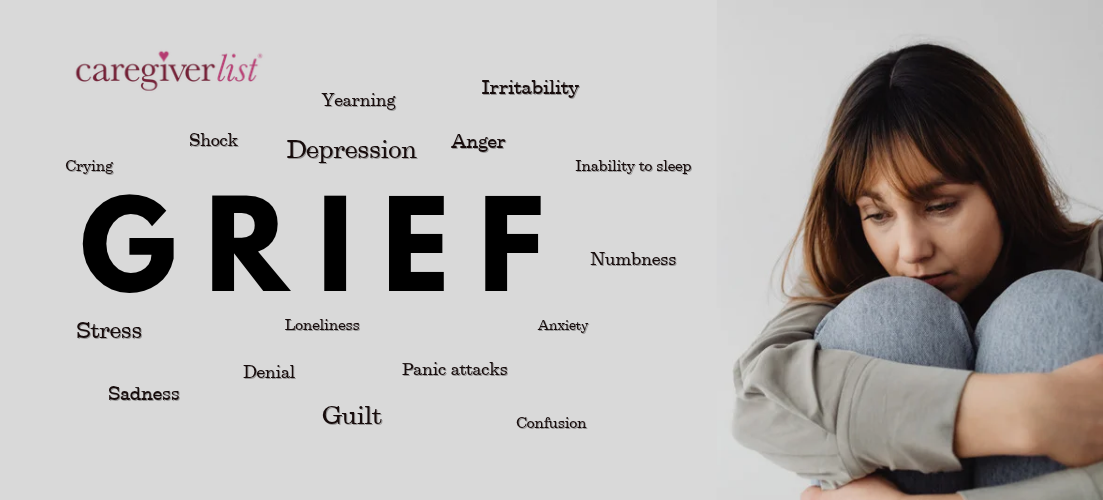
- Name your feelings. Sadness, anger, numbness, relief, and confusion can all occur during grief.
- Allow yourself to feel joy. Happiness does not mean you have forgotten someone.
- Find ways to express yourself. Talking with someone you trust, writing, praying, or taking part in cultural traditions may help.
- Give yourself time. There is no universal deadline for grieving.
- Accept support. Friends, family, support groups, and qualified professionals can help during difficult periods.
Focus on what you need today and reach out for support when you need it.
Supporting Caregivers Through Grief
When a client dies, caregivers may experience sadness, loss, or uncertainty about how to respond. Agencies should give staff space to grieve instead of expecting them to carry on as if nothing happened.
Home care agencies can support caregivers by checking in after a client’s death, allowing time for conversations, and respecting different cultural practices. Peer support programs and counseling can also help.
Supervisors should recognize that grief can affect sleep, concentration, energy, and emotional well-being. They can offer support without assuming everyone grieves in the same way.
Caregivers also help clients and families navigate loss. Allowing people to grieve at their own pace can help families feel heard and supported. Show this by listening without judgment and respecting personal and cultural practices.
At Caregiverlist, we offer courses on caregiver mental health, coping with stress, grief, and emotional well-being to help caregivers manage the challenges they face at work and in their personal lives.