Healthcare Decisions Day + Swedish Death Cleaning: Having “The Talk” Early
In the world of senior care, we often focus on the immediate: medication schedules, mobility assistance, and meal prep. But as any veteran caregiver knows, the most stressful moments often come from the questions we don’t have the answers to.
Did You Know?
National Healthcare Decisions Day is intentionally set for April 16, the day after Tax Day. The founder, Nathan Kottkamp, chose this date to remind us that once you’ve finished the paperwork for how you live (your taxes), you should take one more day to finish the paperwork for how you want to be cared for.
Most families don’t talk about end-of-life decisions until they have to. By then, emotions are high, time is short, and choices can feel overwhelming. Starting the conversation does not require a crisis. In fact, the best time is when things are calm. You might say, “I was reading about planning ahead for healthcare decisions. What would you want if you were ever seriously ill?” Keep it simple and open. Listen more than you speak.
Guide Questions for Self-Reflection
- Have I had a conversation about healthcare wishes with the person I care for?
- Would I feel confident making decisions on their behalf if needed?
- What would I want others to know about my own healthcare preferences?
What can you do as a Caregiver?
- Start small by bringing up the topic during a calm, everyday moment
- Use open-ended questions to encourage meaningful discussion
- Encourage completion of an advance directive and store copies in accessible places
- Share decisions with family members to prevent confusion later
- Complete your own advance directive to model preparedness
Self-Reflection and Action Plan for Senior Care Agencies
To ensure your agency is prepared, take a moment to reflect on your current caseload and implement these high-impact steps:
- What percentage of our current clients have a digitally accessible Advance Directive?
- Use April 16 as a deadline to audit records and ensure every high-acuity client has an updated Healthcare Power of Attorney on file.
- Are our caregivers trained to identify when a client’s “stuff” has transitioned from “memories” to a “mobility hazard“?
- Launch a “Safety Sweep.” Incentivize caregivers to report clutter-related near-misses and use these as opportunities to gently introduce Swedish Death Cleaning concepts to the family.
- How can we better support families in having “The Conversation” before a health crisis occurs?
- Share a “Legacy Starter Guide” with families this month. Position it as a value-added service that honors the client’s autonomy while aligning your internal emergency contacts with their legal Healthcare Proxy.
The Art of “Döstädning” (Swedish Death Cleaning)
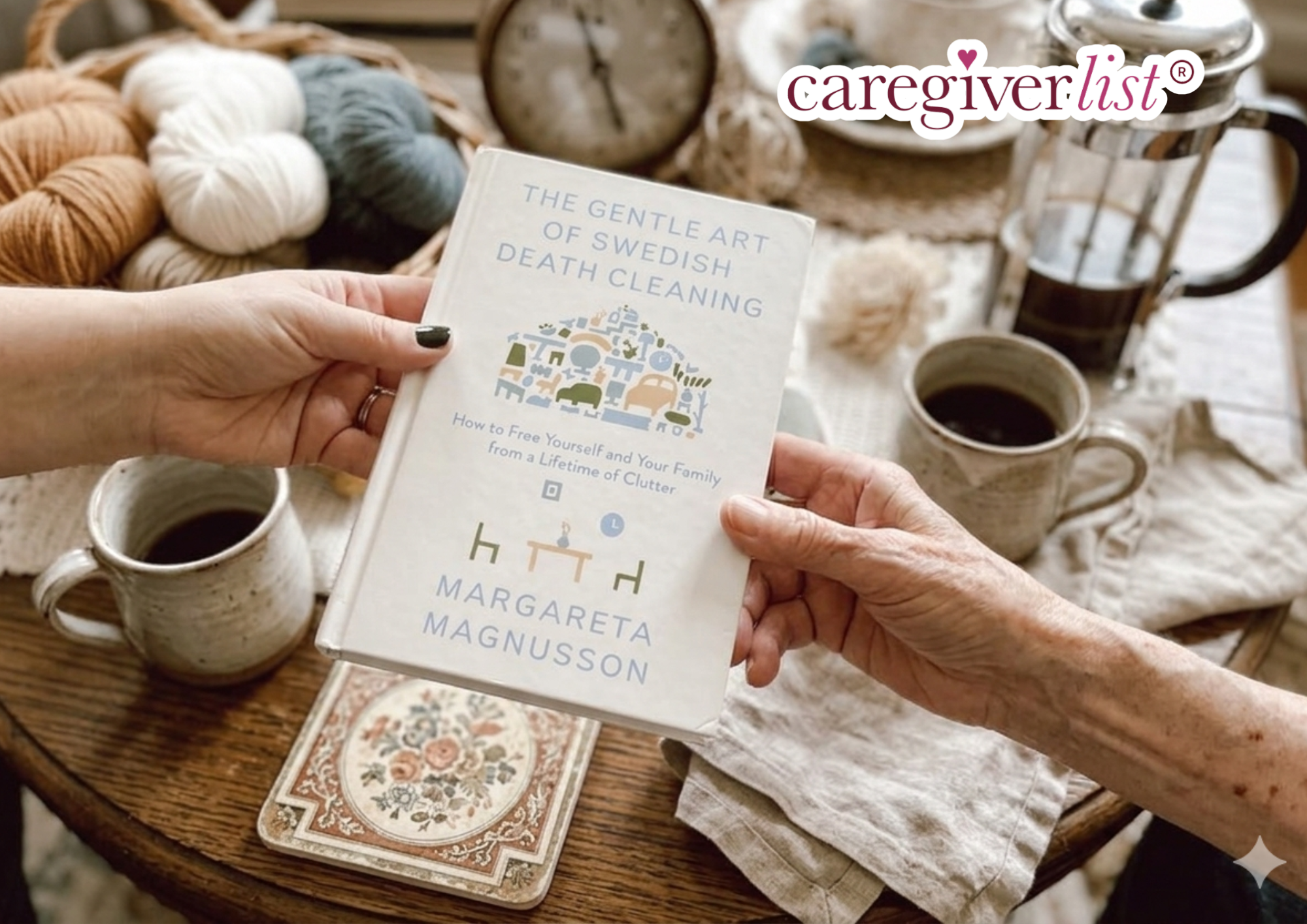
If you haven’t heard the term, Swedish Death Cleaning or Döstädning isn’t as morbid as it sounds! It is the proactive practice of organizing and decluttering your home so that your loved ones aren’t burdened with a mountain of “stuff” after you’re gone. But here is the beautiful part: it’s actually a powerful storytelling tool. Sorting through a trunk of old photos or a collection of heirlooms creates a meaningful space to share memories and explain why certain items were once so special.For caregivers, this is a vital safety tool. Removing excess furniture, clearing out old paperwork, and donating unused items doesn’t just prepare for the future; it creates a safer, fall-proof environment for your loved one today.
As a caregiver, your role is not to push decisions but to create space for them. Clarify, don’t assume. Revisit the conversation over time, because preferences can change.
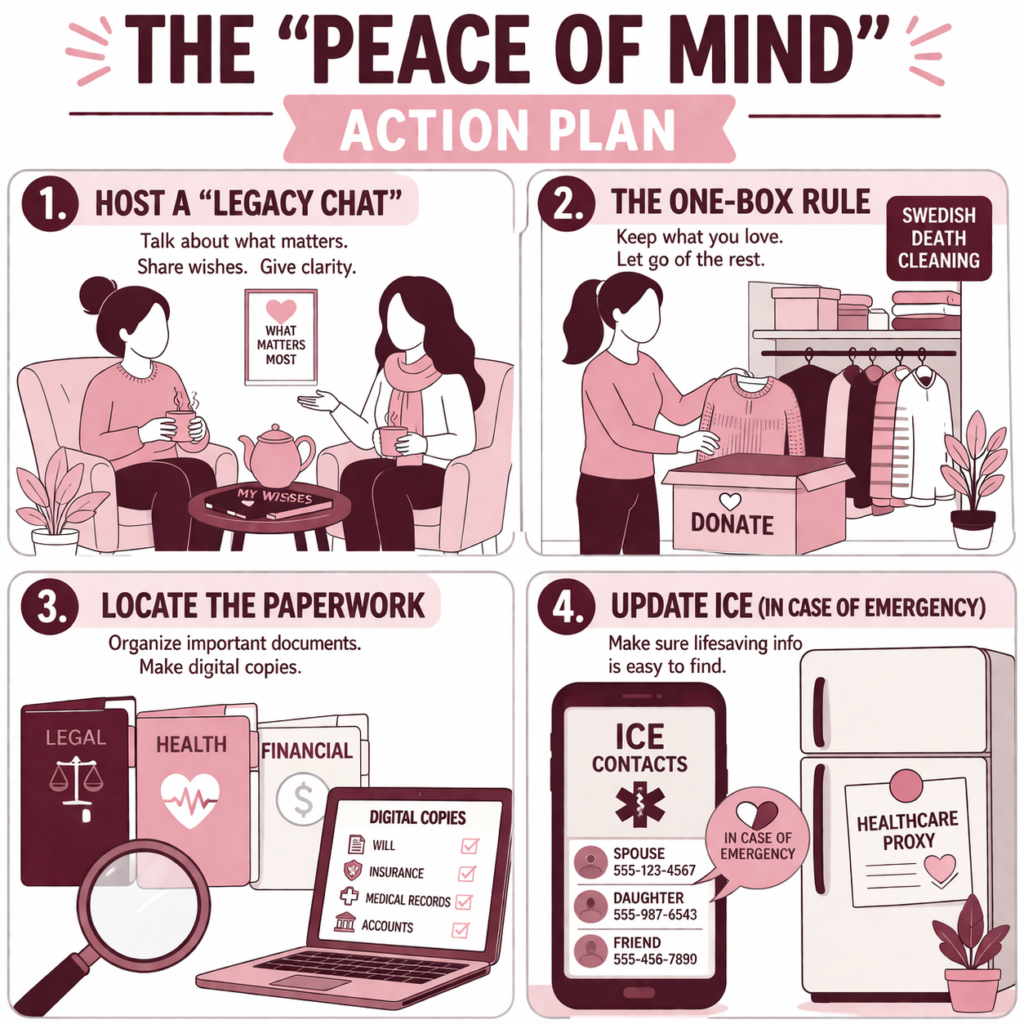
The “Peace of Mind” Action Plan
Host a “Legacy Chat”: Set aside 20 minutes this week. Don’t focus on the end; focus on the wishes. Use a starter guide to help keep the conversation light but productive.
The One-Box Rule: This weekend, pick one closet or drawer. If it hasn’t been used in a year and doesn’t hold deep sentimental value, donate it. This is the heart of Swedish Death Cleaning, clearing the path for safer, easier caregiving.
Locate the Paperwork: Find (or file) the Advance Directive and Healthcare Power of Attorney. Make sure a digital copy is accessible to the primary care team.
Update the “In Case of Emergency” (ICE): Ensure the designated healthcare proxy is listed clearly in your loved one’s phone and on a fridge magnet for easy access by medical professionals.