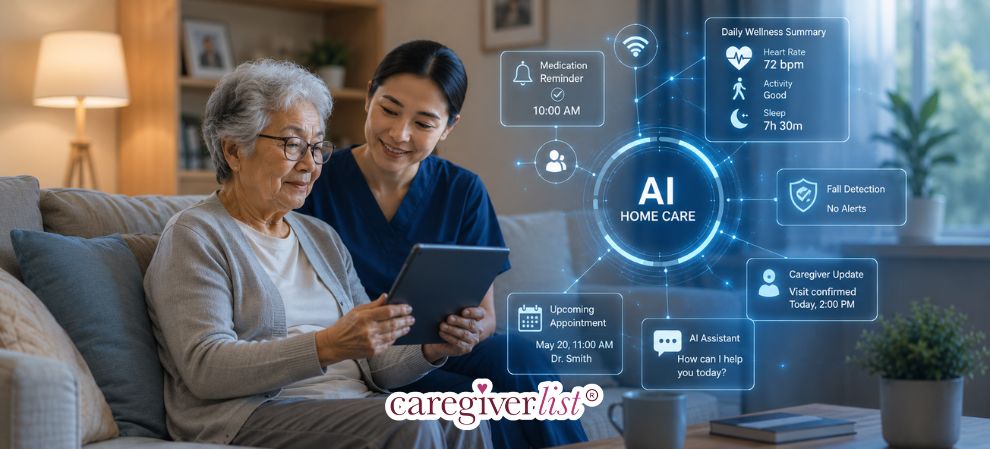
Meet Sensi AI: A Family’s Story
In the WIRED article “My Father Wants to Age in Place. AI Will Be Watching,” writer Steven Blum shares his family’s experience with Sensi AI. His father receives home care and wants to remain in his own home as he grows older. Sensi AI became part of his care to help identify possible changes in his daily routine.
Sensi AI is an always-on audio-based virtual care assessment tool, no bigger than an air freshener, used by some home care agencies. It does not use cameras. Instead, it listens for audio cues both verbal and non-verbal, and conversations that may signal a concern. The system can identify early signs of dementia. It can detect possible falls, coughing or other changes that may need attention. It can also identify if a patient is urinating more frequently which may be indicative of a urinary tract infection. It then sends alerts to the care team for review.
At some point, Sensi flagged his father as someone with a “possible high risk of falls” and began listening for words indicating he was unsteady on his feet. Sensi alerted caregivers when Sensi’s microphone overheard him saying the word “fall”. Wanting to better understand the incident, Blum requested the recordings and transcripts. After listening, he admitted that he “felt like a spy.” While the recordings helped him understand his father’s daily life, it also made him question how much privacy older adults give up when AI becomes part of their care.
Blum also questioned whether his father fully understood when Sensi was listening. After reading the transcripts, his father seemed surprised and said, “It’s pretty weird that it hears words.” He later reflected on the added safety and added, “But I guess it’s worth it.”
The recordings also revealed a different side of Blum’s father. He often tried to sound strong when speaking with his son, but he shared more of his fears with friends and caregivers. Many adult children may recognize this experience. His story does not argue that AI is good or bad. Instead, it explores the balance between safety, privacy, dignity, and trust. It reminds us that compassionate human care is still the most important.
Why AI Is Becoming a Trend in Home Care
More older adults want to remain safely at home as they age. At the same time, many home care agencies continue to face caregiver shortages and growing demand for services. AI tools can help agencies identify changes between visits, improve communication with care teams, and support earlier interventions when concerns arise.
AI is not designed to replace caregivers. The most successful agencies will combine technology with skilled caregivers who build trust, provide companionship, and deliver person-centered care every day.
What Home Care Agencies Can Do
AI literacy is becoming an important skill for the entire home care team. Provide training on how your AI technology works and what its alerts mean. Teach caregivers how to document observations, protect client privacy, and report concerns according to agency policy. Encourage caregivers to use AI as one source of information but never forget to rely on their clinical observations, communication skills, and compassionate care.
Agency leaders, office staff, and caregivers should understand what AI can do, what it cannot do, and how to use it responsibly. Training should cover the following:
- Privacy
- Confidentiality
- Documentation
- Getting the client’s permission (informed consent)
- Appropriate response to AI alerts
At Caregiverlist, Inc., we believe the future of home care combines innovation with compassion. We support technologies that help agencies improve quality and recognize changes sooner. We also believe that technology should enhance, not replace, the relationships between caregivers and older adults.
Questions Every Home Care Agency Should Ask Before Adopting AI
- Does this technology improve client care or simply collect more data?
- How will we train caregivers to use it responsibly?
- How will we protect client privacy and confidentiality?
- How will AI fit into our existing care plans and documentation?
- How will we explain the technology and obtain informed consent from clients and families?
Frequently Asked Questions
Can AI replace caregivers?
No. AI supports caregivers by providing additional information. It cannot replace human judgment, compassion, or personal care.
Should caregivers trust every AI alert?
No. An alert is only one piece of information. Caregivers should observe the client, document what they see, and report concerns according to agency policy.
Why should caregivers learn about AI?
AI is becoming more common in home care because more older adults want to age in place. Learning how these tools work helps caregivers provide safe, respectful, and person-centered care while protecting privacy and dignity.