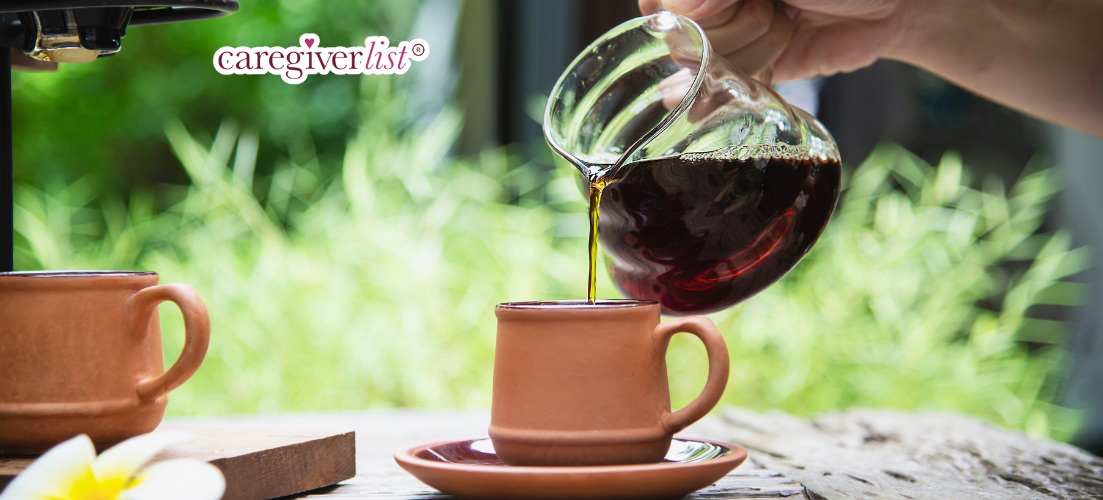
Coffee and tea might be doing more than waking us up in the morning. A new study found a real link between caffeine and brain health.
In an interview with CBS News Miami, Dr. Peter Gliebus, Chief of Neurology at Baptist Health’s Marcus Neuroscience Institute, discusses findings from a major Harvard study regarding caffeine consumption and brain health.
The results were clear. People who drank the most caffeinated coffee, about two and a half cups a day, had an 18% lower risk of dementia. This group also performed better on memory and thinking tests. People who drank one to two cups of caffeinated tea a day saw similar results. On the other hand, people who drank decaf did not show the same clear benefit. (Harvard Health Publishing, 2026).
Caffeine and Brain Health
Researchers have a few ideas. Caffeine may help reduce inflammation in the brain. It may also help slow the buildup of amyloid-beta, a protein tied to Alzheimer’s disease. Coffee and tea both contain polyphenols too. These natural compounds may protect brain cells over time.
It’s important to stay realistic here. This was an observational study. It shows a strong link, but it doesn’t prove that caffeine directly prevents dementia. More research is still needed.
What This Means for Caregivers
You don’t need to change anyone’s routine. But this research gives you a simple, low-risk talking point. Here’s how to put it to use:
- Encourage moderate intake. Two to three cups of coffee or one to two cups of tea a day matched the biggest benefit in the study. More isn’t necessarily better.
- Check with the care team first. Caffeine can affect heart rate, blood pressure, and sleep. Always confirm it’s safe for each client based on their health history and medications.
- Watch the timing. Caffeine late in the day can disrupt sleep for older adults. Mornings and early afternoons work best.
A Quick Reminder
Brain health depends on much more than one beverage. Sleep, movement, social connection, and a balanced diet all play a role. Think of caffeine as one small piece of a much bigger picture.
FAQ
Q: How much coffee or tea is considered “safe” for older adults?
A: The study linked benefits to two to three cups of coffee or one to two cups of tea a day. Every person is different though. Always check with a doctor first, especially if the client has heart or sleep issues.
Q: Does decaf coffee offer the same brain benefits?
A: No. Decaffeinated coffee intake was not significantly associated with lower dementia risk or better cognitive performance. Caffeine appears to be the key factor, not other compounds in coffee.
Q: Can too much caffeine be harmful for seniors?
A: Yes. High caffeine intake can raise heart rate, disrupt sleep, and interact with certain medications. Moderation matters, and medical guidance is essential.
Q: Does this study prove caffeine prevents dementia?
A: Not exactly. It shows a strong link, but it’s an observational study. It can’t prove cause and effect. More research is needed to confirm the connection.
Q: What’s the best time of day for a client to drink coffee or tea?
A: Morning or early afternoon is best. Caffeine later in the day can interfere with nighttime sleep, which is already a common challenge for older adults.