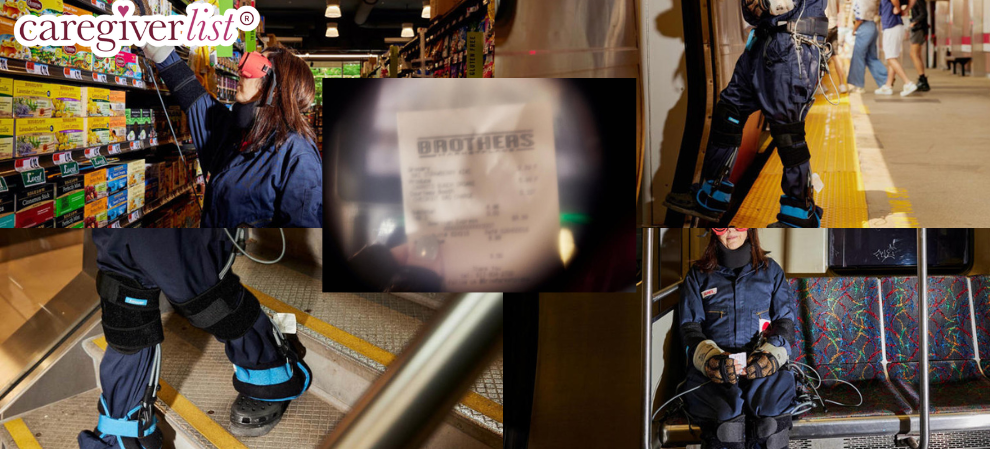
We often talk about empathy in caregiving, the ability to understand and share the feelings of another. But do we truly understand the day-to-day experience of aging? A reporter recently spent a day in “Agnes“, an age-simulation suit developed by MIT’s AgeLab, and her insights are essential for every caregiver.
The suit is designed to replicate the physical realities of advanced age: weighted vests mimic muscle loss, bungees restrict joint movement, special goggles blur vision, and gloves reduce dexterity.
The goal? To understand not just the physical, but the cognitive and emotional toll of aging. Here’s what we can learn.
The Physical Struggle Is Only Half the Story
Unsurprisingly, the physical tasks were difficult. The reporter struggled to reach items on a high shelf, had trouble opening a simple soup container, and found it nearly impossible to use a keypad.
This is a familiar story for many caregivers. We see our clients struggle with jars, buttons, and small print. But the experiment revealed a deeper, invisible challenge.
The “Cognitive Load” of Simple Tasks
The most profound insight was what the researchers call “cognitive load.” This is the hidden mental exhaustion that comes from navigating a world not built for you.
- At the Supermarket: While fumbling with the self-checkout keypad, the reporter felt the stress and embarrassment of the line growing behind her.
- Crossing the Street: Faced with a 14-second crosswalk timer, she hesitated and ultimately refused to cross. The mental calculation of weighing the traffic, her own speed, and the risk of a fall was too overwhelming.
- On the Subway: Every jolt and lurch was a potential disaster. She had to dedicate 100% of her mental focus to bracing herself and anticipating the next stop, a task most of us do while scrolling through our phones.
The Caregiver Takeaway: When a senior client seems slow, hesitant, or easily tired, it’s often not a lack of trying. It’s a sign that their brain is working overtime to process risks, manage unsteadiness, and make decisions that we take for granted. What we see as a simple walk to the car may, for them, be a complex mental exercise in balance and risk assessment.
This experiment isn’t just about feeling sympathy; it provides a practical roadmap for caregivers. Experts cited in the story highlight three key areas of action:
- “Practice” to Maintain Ability: One expert noted that much of physical decline comes from inactivity. As caregivers, we can be partners in this practice. Encourage and facilitate safe movement. This could mean walking with them, not for them, or turning simple household tasks into opportunities for gentle activity.
- Engage the Mind and Body: The best way to improve balance and prevent falls is to use activities that require the mind and body to work together. Most falls happen during a moment of distraction. Suggesting and participating in activities like yoga, seated tai chi, dancing, or even simple games like jigsaw puzzle can improve mobility and cognitive engagement.
- Champion a Positive Mindset: How we talk about aging matters. Research from Yale shows that older adults who are exposed to positive words about aging (like “wise”) perform better on memory tests than those exposed to negative words (like “senile”). Caregivers have a powerful role in fighting ageism. We can change the narrative by focusing on wisdom, respect, and capability, which can measurably improve a client’s health and outlook.
Ultimately, the lesson from the “Agnes” suit is that aging is a full-body and full-mind experience. Our role as caregivers is to see the whole person to provide not just a steady arm, but the patience, respect, and encouragement they need to navigate their world with confidence.