What caregivers should know about vision loss, dementia, and everyday care.
When familiar faces become harder to recognize
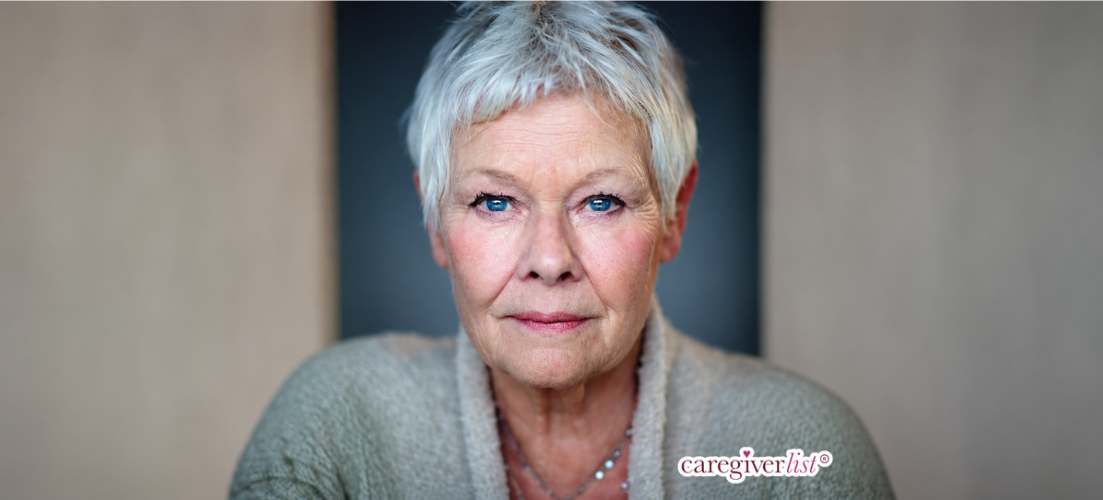
At 91, award-winning actress Dame Judi Dench has reached a point where her eyesight makes it difficult to read, act, and recognize people.
Doctors diagnosed Dench with age-related macular degeneration (AMD) in 2012. . In an October 2026 BBC interview, she spoke about how the condition has affected her daily life. She described approaching people she thought she knew and almost hugging them before realizing she had mistaken them for someone else.
Age-related macular degeneration (AMD) is an eye condition that affects the macula, the center part of the retina. It makes it harder to see fine details. Everyday tasks can become more difficult as it gets worse.
For many older adults, changes in eyesight happen gradually. Reading the newspaper becomes harder. Faces become less familiar from a distance. Walking through a room can require more concentration.
These changes can also affect how someone responds to the people around them. An older adult who avoids group activities or struggles to follow a conversation may be having difficulty seeing what is happening.
More than 40% of people with dementia in long-term care may have vision loss
A February 2026 study published in npj Dementia reported that more than 40% of people with dementia living in long-term care experience significant vision loss.
The SENSE-Cog Residential Care study examined how care facilities could improve hearing and vision support for residents with dementia. Researchers identified gaps in sensory care, including limited staff training and difficulties recognizing hearing and vision problems.
npj Dementia (February 16, 2026): SENSE-Cog Residential Care study.
Consider what this might look like during a caregiver’s visit to a client’s home.
A client may leave food on their plate because they cannot see it clearly. They may have trouble finding their glasses or locating items in a familiar room. Some may stop reading or watching television because they can no longer see the screen or printed words comfortably.
A caregiver might interpret these changes as forgetfulness, confusion, or a lack of interest. Poor eyesight could be part of the problem.
Before assuming a client has lost interest in an activity or cannot remember how to complete a task, think about whether they can see what they are trying to do.
What caregivers should look for
People with dementia may have difficulty explaining that their eyesight has changed. Caregivers often notice the signs through everyday interactions.
Watch for changes such as:
- Bumping into furniture or misjudging doorways.
- Squinting or holding objects close to the face.
- Struggling to find food, utensils, or personal belongings.
- Avoiding reading, television, or activities that require visual attention.
- Hesitating when walking through unfamiliar areas.
- Failing to recognize familiar people until they are nearby or speak.
A sudden change in vision needs prompt medical attention. Report gradual changes to your supervisor and inform the family member.
Five practical ways caregivers can help
1. Check the lighting.
Make sure rooms and hallways have enough light. Pay particular attention to bathrooms, stairways, and reading areas. Reduce glare from windows and reflective surfaces.
2. Keep things in familiar places.
Avoid rearranging furniture or moving frequently used items without telling the person. Clear walkways and remove loose rugs that could cause trips.
3. Make objects easier to see.
Use plates that contrast with the table or food. Choose towels and bathroom items that stand out against their surroundings. Clear color differences can help someone locate objects.
4. Explain what you are doing.
Approach the person from the front and say their name before speaking. Identify yourself if needed. Tell them when you are moving an object or helping with a task.
5. Check their glasses and report vision changes.
Make sure they have their prescribed glasses and can find them when needed. Clean the lenses regularly and report concerns to your supervisor or the appropriate family member.
A closer look can change the care we provide
When an older adult struggles with a familiar task, take a moment to consider their eyesight. Can they see the food on their plate? Can they find their clothes? Can they recognize the person speaking to them?
These are simple questions, but they can help caregivers understand what a person is experiencing and decide what support they need.
Good caregiving starts with paying attention to those everyday changes.