Caregivers often notice physical changes first. These may include changes in appetite, mobility, medication use, hygiene, or fall risk.
Emotional changes matter, too.
Stress, loneliness, and hopelessness can quietly affect daily life. They may change how an older adult thinks, remembers, communicates, or takes part in normal routines.
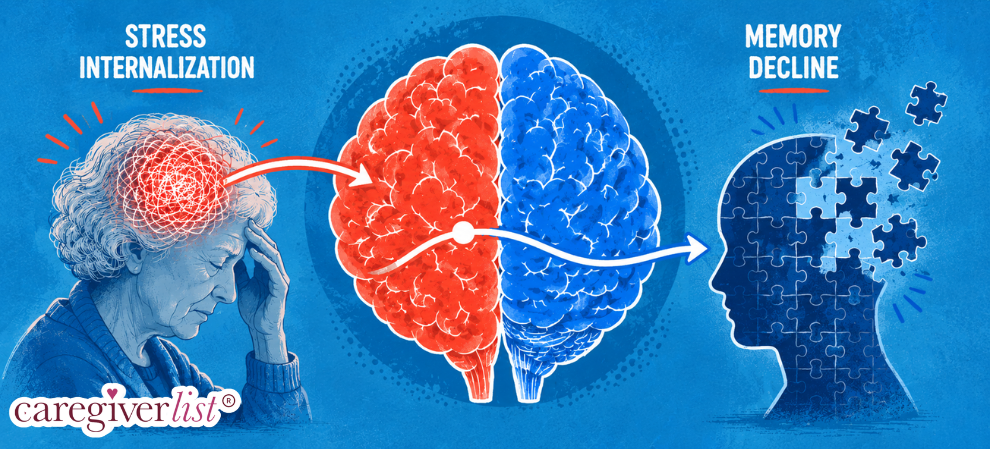
Rutgers Health research led by Michelle Chen found a connection between “stress internalization” and memory decline over time. Stress internalization means a person carries stress inward instead of openly expressing it or asking for support. In everyday caregiving, it may sound like, “I don’t want to bother anyone,” or “I’m fine,” even when the person seems withdrawn, worried, or less engaged than usual.
This matters because caregivers may notice these quiet changes before anyone else does. A change in mood, motivation, or social connection may be an early sign that the person needs more support.
Rutgers also notes that these emotional concerns may go unnoticed in aging populations. But they can still play an important role in how the brain ages.
This does not mean stress automatically causes dementia. It does mean caregivers should take emotional well-being seriously.
What Stress and Hopelessness May Look Like
Older adults may not always say, “I feel stressed” or “I feel hopeless.”
Some may keep their feelings to themselves. Others may avoid talking about emotions. Some may believe they should handle everything on their own. An older adult who feels overwhelmed may skip meals. They may ignore symptoms, miss medications, stop socializing, or refuse help.
Caregivers may notice:
- Less interest in usual routines, hobbies, faith activities, or family calls
- More time spent alone
- Changes in sleep, appetite, or personal care
- Irritability, worry, tearfulness, or unusual quietness
- More forgetfulness during stressful periods
- Less motivation to attend appointments
These changes should not be dismissed as “just aging.” The National Institute on Aging notes that depression is common in older adults. But it is not a normal part of aging.
Over time, these changes can affect independence. They can also affect communication, safety, and overall quality of life.
What Caregivers Can Do
Start with calm and respectful observation.
Do not force the person to “cheer up.” Do not pressure them to talk before they are ready. Instead, create a safe and patient space.
Try simple supportive phrases:
“I’ve noticed you seem quieter lately. I’m here with you.”
“Would you like to sit together for a few minutes?”
“Is something feeling heavier than usual today?”
“Would it help if we called your family member, friend, nurse, or doctor?”
Caregivers can also support emotional well-being through daily routines. Help the person stay connected. Encourage appointments, safe movement, regular meals, and meaningful activities.
Small moments of support can make a difference.
When to Report Concerns
Report changes according to the care plan, agency policy, or family instructions. If there is immediate danger, stay with the person when possible. Contact emergency help right away.
Caregivers are not expected to diagnose depression, dementia, anxiety, or any mental health condition.
Your role is to notice, support, document, and report.
Small observations can help families and healthcare professionals respond earlier.
Quick FAQ
Can stress affect memory in older adults?
Yes. Research suggests that internalized stress and hopelessness may be linked with memory decline over time, especially when these feelings are ongoing and unsupported.
Is hopelessness a normal part of aging?
No. Older adults may experience grief, health changes, or life transitions, but ongoing hopelessness should be taken seriously and reported.
At Caregiverlist, we believe that caring for older adults means supporting the whole person, including their emotional well-being. By helping caregivers recognize these changes early, we can support more informed, compassionate, and dignified care for aging adults.