Caregiving is a vital and demanding role, but the experience is not the same for everyone. For LGBTQ+ individuals, stepping into a caregiving role often comes with a unique set of challenges. In the United States, there are an estimated 3 million LGBTQ+ caregivers.
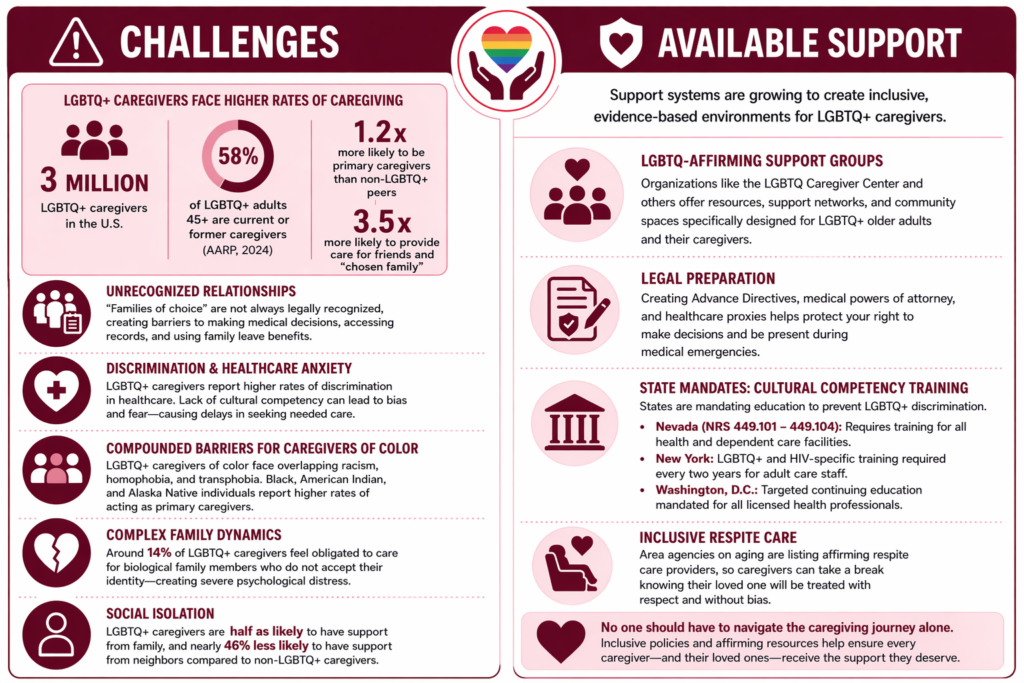
Research indicates that LGBTQ+ adults take on caregiving responsibilities at higher rates than the general population. According to a 2024 AARP survey, 58% of LGBTQ+ adults aged 45 and older are current or former caregivers. They are 1.2 times more likely to be primary caregivers than their non-LGBTQ+ peers, and 3.5 times more likely to provide care for friends and “chosen family.”
Despite these numbers, the specific barriers this community faces are frequently overlooked in standard healthcare and social service settings.
Unique Challenges Highlighted by Research
When an LGBTQ+ caregiver navigates the healthcare system for a loved one, they often face hurdles tied directly to their identity and family structure:
- Unrecognized Relationships: Many LGBTQ+ adults rely on “families of choice”—close friends or partners who provide significant emotional and physical support. Because these relationships are not always legally recognized, caregivers can face barriers when trying to make medical decisions, access records, or use family leave benefits.
- Discrimination and Healthcare Anxiety: LGBTQ+ caregivers report higher rates of discrimination in healthcare settings. A lack of training and cultural competency among some medical providers can lead to bias. This fear of discrimination sometimes causes caregivers and care recipients to delay seeking necessary medical help.
- Compounded Barriers for Caregivers of Color: Navigating the healthcare system is often more difficult for LGBTQ+ caregivers of color, who frequently manage the combined burdens of racism, homophobia, and transphobia. Across demographics, Black, American Indian, and Alaska Native individuals also report higher rates of acting as primary caregivers, increasing the need for culturally aware support in these communities.
- Complex Family Dynamics: Around 14% of LGBTQ+ caregivers report feeling obligated to care for biological family members who do not accept their identity. Providing demanding, unpaid care for someone who is unsupportive can create severe psychological distress.
- Social Isolation: Studies show that LGBTQ+ caregivers are half as likely to have support from family, and nearly 46% less likely to have support from neighbors compared to non-LGBTQ+ caregivers.
What Support is Available?
While the challenges are significant, support systems are growing. Organizations and care agencies are working to create more inclusive, evidence-based environments. Here are resources and steps that can help:
- LGBTQ-Affirming Support Groups: Organizations like the LGBTQ Caregiver Center and SAGE (Services and Advocacy for Gay, Lesbian, Bisexual, and Transgender Elders) offer resources, support networks, and community spaces specifically designed for LGBTQ+ older adults and their caregivers.
- Legal Preparation: Since “families of choice” face legal blind spots, completing Advance Directives, medical powers of attorney, and healthcare proxies is a critical step. These documents legally protect the caregiver’s right to make decisions and be present during medical emergencies.
- State-Mandated Cultural Competency Training: Many states now recognize the critical need for structured education to protect LGBTQ+ patients from discrimination and bias. For instance, Nevada law (NRS 449.101 – 449.104) requires health and dependent care facilities to provide specific cultural competency training. These statutes also mandate policies ensuring patients are addressed by their preferred names and pronouns, and that electronic health records are adapted to reflect diverse gender identities. Other areas are taking similar steps: New York requires adult care facilities and nursing homes to conduct LGBTQ+ and HIV-specific cultural competency training every two years, and Washington, D.C. mandates targeted continuing education for licensed health professionals. These regulations ensure clinical and support staff are better equipped to respect the needs of all populations.
- Inclusive Respite Care: Area Agencies on Aging are working to list affirming respite care providers, ensuring that caregivers can take a break without fear that their loved one will face bias in a care facility.
Recognizing the specific hurdles LGBTQ+ caregivers face is the first step toward better support. By promoting inclusive policies and connecting caregivers to affirming resources, the healthcare community can help ensure no one has to navigate the caregiving journey alone.